.jpg?rect=0,448,1920,384&w=2560&h=512&auto=format)
The damage is rarely dramatic. There is no sudden collapse, no visible warning sign. A homeowner presses a finger against a skirting board and feels it give. A renovation contractor taps a beam and hears the hollow echo of wood that has been eaten from the inside out. By the time termites become visible, the damage has already been done, sometimes for years.
In my years studying termites in Malaysia and across Asia, this is the scenario I encounter again and again. Not because we lack the knowledge to do better. Not because the technology doesn't exist. But because the industry built around managing these insects has, in many ways, stopped keeping pace with what we actually know about them.
I am on a mission to change this.
The paradox of effective primary pest control
For a long time, the dominant focus of termite control in Singapore has been Coptotermes spp., aggressive, widespread subterranean termites that pest management professionals know well. The baiting systems, the treatment protocols, the monitoring strategies, much of it has been developed with Coptotermes in mind. And when it works, colonies are eliminated and clients are satisfied.
But the paradox of effective pest control is that success can breed complacency. A treated building receives a certificate, the client moves on, and monitoring stops. What is rarely communicated is that a successfully treated structure remains just as vulnerable to a new colony as it was before.
Coptotermes colonies are persistent and widespread across Singapore’s urban landscape. Eliminating one does not remove the conditions that attracted it in the first place, the soil moisture, the timber access points, the structural gaps that make a building an attractive target. Without continued monitoring and proofing, the same building is simply waiting for the next colony to find it.
When the alarm sounds, it is already too late
Subterranean termites do not announce their approach. Their foraging tunnels run underground, through soil, through concrete voids, through the structural layers of a building’s foundation. A perimeter monitoring station will only detect a colony that has already extended its reach that far.
Everything happening deeper underground, inside walls, within structural timber, remains invisible until it surfaces as damage that is already done.
iTAS real-time termite alert system
I have spent considerable time working with technology manufacturers on this problem, conducting field trials to gather real-world data from the kinds of complex, obstructed urban environments that laboratory testing cannot replicate. An old shophouse with an irregular foundation, a high-density residential block, a commercial development with deep basement levels, these are the conditions our monitoring systems actually operate in, and they behave very differently from controlled settings.
Calibrating technology to those realities is slow, painstaking work, because the gap between what sensors can theoretically detect and what they actually detect in the field is significant.
The technology to do better exists. We have developed iTAS, a real-time monitoring alert system for termite activity, using Anticimex SMART monitoring systems, capable of providing continuous, real-time surveillance of termite activity, are available and deployable.
The obstacle, in my experience, is not technological. It is human.
Why the best protection is the hardest to sell
Structural proofing, sealing the entry points that allow termites access to a building in the first place, is one of the most effective long-term strategies we have.
At Anticimex, it is a cornerstone of how we approach termite management. The cost is real and immediate, and the benefit is invisible and future-facing, which makes it a genuinely difficult conversation to have with a client. But it is a conversation we believe is worth having every time.
Smart systems require smart insights
Even where monitoring technology has been adopted by providers across the industry, I frequently find it is not being used effectively. Systems are installed, data is collected, and then the data sits unused.
The hardware is in place but the trained staff, the operational protocols, and the organizational commitment to act on what the technology is telling them, are not. A sensor that nobody is watching is no better than no sensor at all.
Integrated pest management is no longer optional
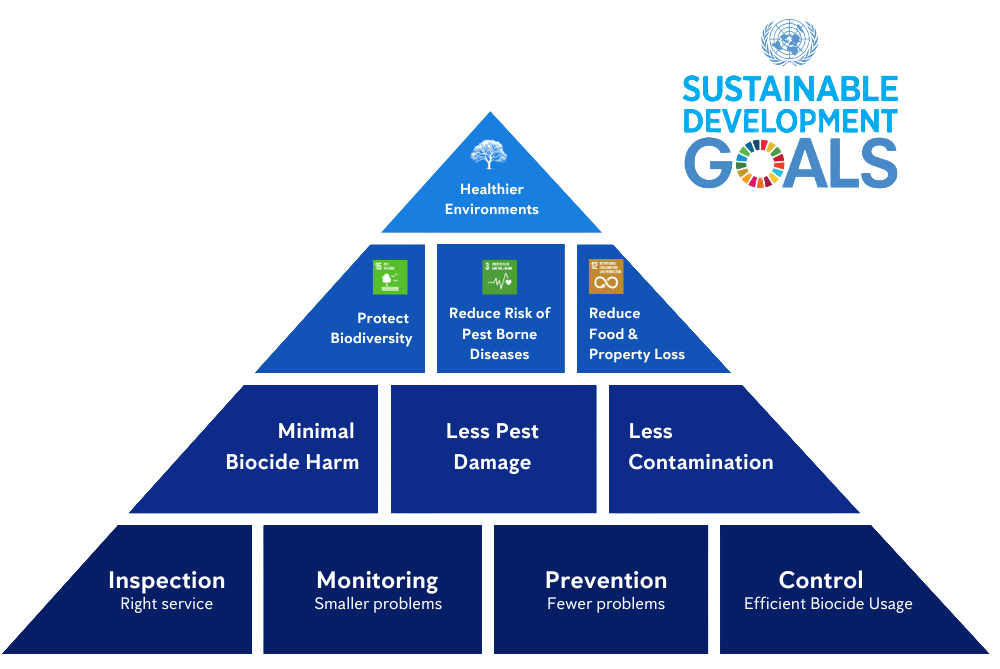
My answer to these challenges is not a new chemical compound or a more powerful termiticide. It is a framework, one that has existed for decades and that Anticimex has built its Anticimex360 approach around.
.png?fit=scale&auto=format)
Shaping Anticimex and its customers for effective termite control
From reactive to proactive
Monitoring technology must shift from reactive to proactive, identifying activity before damage occurs, not after. SMART-systems must be deployed as genuine management tools, with professionals who are trained to interpret and act on the data they generate, not simply to install the hardware and move on.
Pre-construction treatment and structural proofing must be repositioned as investments, communicated to clients in terms of what they prevent over time rather than what they add to an upfront bill.
Education is a part of our service
Equally important is the work of educating clients, and this is work that tends to be overlooked. Too many building owners and facilities managers still understand termite control as a one-time event: something is sprayed, a certificate is issued, and the problem is considered solved.
Building science and professional standards
Singapore brings remarkable technical sophistication to the management of its infrastructure. The insects working quietly beneath its foundations deserve the same rigour. The knowledge exists and the tools exist, but what is needed now is the commitment and technical training to use them properly.
I have spent my career trying to build both the science and the professional standards at Anticimex that could make that possible.
 24/7 SalesHotline